The distress of a stolen vehicle can be incredibly disheartening, leaving you frustrated and uncertain. However, the recovery of a stolen vehicle can bring a surprising sense of relief and hope.
In this detailed guide, we aim to offer comprehensive assistance, walking you through the necessary steps and procedures once your vehicle is recovered.
From liaising with authorities to navigating insurance processes, we’ll help ensure a smoother and more efficient recovery process, alleviating some of the stress associated with this unfortunate situation.
Moreover, while discussing post-theft measures, we’ll explore proactive steps like GPS tracking systems and preventative measures. These strategies can significantly enhance the security of your vehicle, providing added layers of protection against potential future thefts.
By delving into these proactive approaches, we aim not only to assist with the aftermath of theft but also to empower you with tools and knowledge to safeguard your vehicle against similar incidents in the future.

1. Report the Recovery to the Police
The first and most crucial step is to report the recovery of your stolen vehicle to the police.
Contact your local law enforcement agency and provide them with all the relevant details, such as the make, model, license plate number, and any distinguishing features of your vehicle.
Acting promptly ensures that the police can verify the recovery and update their records accordingly.
This step is critical to avoid being mistakenly flagged for driving your own stolen vehicle or facing unnecessary legal complications. Request a copy of the updated police report, as this document will be essential for insurance claims and legal proceedings.
2. Sync Your GPS Tracking System for Future Monitoring
Vehicles equipped with GPS tracking systems significantly improve recovery odds.
Modern tracking systems can be synced to your smartphone, allowing for real-time updates on your vehicle’s location. If your vehicle is stolen, this technology can be a game-changer.
When theft occurs, law enforcement should be provided with access to GPS tracking data. Agencies can use this information to pinpoint the vehicle’s location, coordinate recovery efforts, and apprehend suspects efficiently.
Some advanced systems even allow you to remotely disable the engine or lock the vehicle, making it harder for thieves to escape.
Investing in a GPS tracking system not only increases the chances of recovering your vehicle but also deters potential thieves. Highlighting this capability in your insurance policy discussions may even qualify you for premium discounts.
3. Reclaim Legal Ownership and Manage Fees & Documentation
When your vehicle is recovered, you must re-establish legal ownership to claim it. The process typically involves:
- Providing Proof of Ownership: Present the title, registration, and a valid photo ID.
- Paying Impound Fees: If your vehicle was impounded after recovery, you may need to cover storage fees before it is released. These fees can accumulate quickly, so acting promptly is critical.
- Resolving Liens: If your vehicle is financed, coordinate with your lender to ensure all documents are in order.
Sometimes, recovered vehicles may be issued a salvage title if they sustained significant damage or were involved in an insurance claim.
A salvage title affects the resale value and may require additional inspections or repairs before re-registration.
4. Contact Your Insurance Provider if Ownership Has Transferred
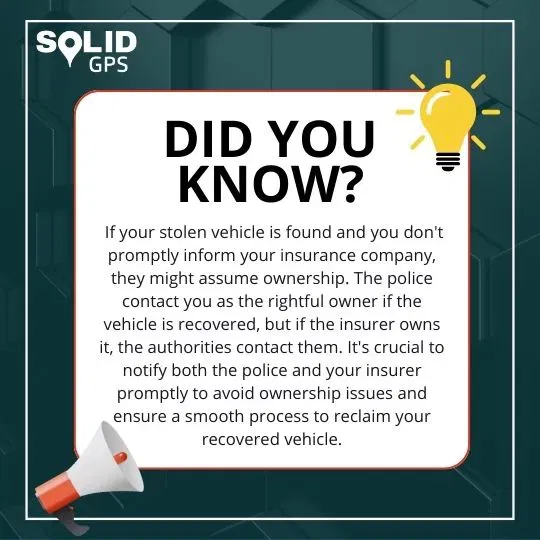
If you’ve filed an insurance claim for your stolen vehicle and received full payment, ownership of the vehicle transfers to the insurance company.
However, personal belongings inside the vehicle remain your property. In the event your vehicle is recovered after the claim has been settled,:
- Contact Your Insurance Provider Immediately: Inform them of the recovery and inquire about the next steps.
- Discuss Buy-Back Options: Some insurers may allow you to buy the vehicle back if you wish to retain it. This process typically involves paying the claim amount back or an agreed fee.
Understanding this ownership transfer is crucial, as any disputes over vehicle possession can complicate the recovery process.
5. Work with Authorities on the Investigative Process
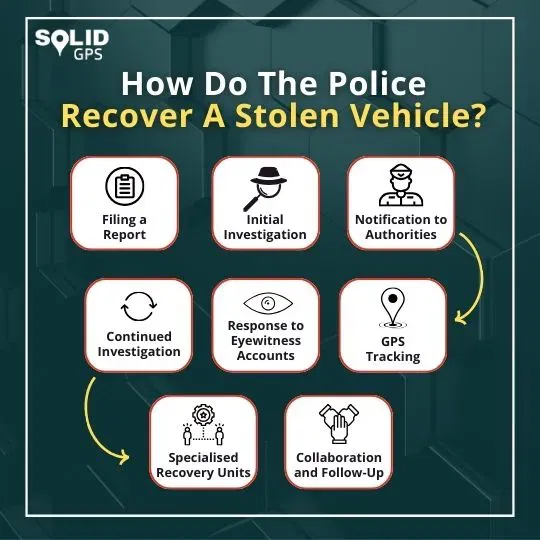
Law enforcement agencies play a critical role in recovering stolen vehicles. The investigative process often involves:
- Collaboration with National Agencies: Organizations like the National Insurance Crime Bureau (NICB) work closely with local authorities to track stolen vehicles across state lines.
- Use of Surveillance and Technology: Investigators may rely on CCTV footage, Automatic License Plate Recognition (ALPR) systems, and GPS data to locate vehicles.
- Monitoring Secondary Markets: Authorities frequently check pawn shops, online marketplaces, and chop shops for stolen vehicle parts.
Staying in regular contact with law enforcement and providing them with all relevant information enhances the chances of a successful recovery.
6. Inspect and Assess Your Vehicle’s Condition
Once the police have confirmed the recovery of your vehicle, the next step is to assess its condition. Schedule an appointment with a trusted mechanic or a qualified technician for a thorough inspection.
Key aspects of the assessment include:
- External Damage: Look for dents, scratches, or signs of forced entry.
- Internal Issues: Check for tampering with the ignition system, wiring, or dashboard
- Hidden Problems: Thieves may leave behind hidden damage, such as engine or transmission issues, that aren’t immediately apparent.
Your insurance provider will likely require this inspection to determine coverage for repairs. Insurance adjusters play a pivotal role in evaluating the extent of damage, so ensure all findings are well-documented.
7. File a Claim for Stolen Personal Belongings
It’s important to note that auto insurance policies typically do not cover personal items stolen from a vehicle. Instead, renters’ or homeowners’ insurance policies may provide coverage for these losses.
If personal belongings were stolen along with your car:
- File a Claim with Your Renters/Homeowners Insurance: Include a detailed list of stolen items and their estimated value.
- Provide Supporting Documentation: Photos, receipts, and the police report can strengthen your claim.
Understanding these coverage distinctions helps avoid frustration during the recovery process.
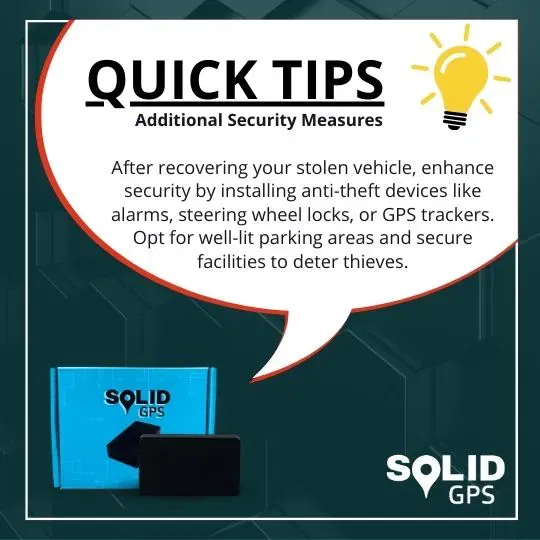
8. Implement Preventive Measures to Avoid Future Theft
To minimise the risk of future theft, consider adopting the following preventative measures:
- Install a GPS Tracking System: Real-time tracking significantly aids in both prevention and recovery.
- Invest in a Car Alarm: A reliable alarm system can deter potential thieves by drawing immediate attention to unauthorised access.
- Use Steering Wheel Locks: These visible deterrents make vehicles harder to steal.
- Park in Well-Lit Areas: Parking in visible, well-trafficked locations reduces the risk of theft.
- Hide Valuables: Keep items out of sight, such as in the trunk or glove compartment.
Preventative measures not only protect your vehicle but also provide peace of mind.
If you just got your car back the last thing you want is to go through this again. Solid GPS sits hidden inside your vehicle, sends your phone an alert the when it moves and lets you share a live tracking link with police in one tap. 12 month battery. No wiring. From $157 with a 31 day free trial.
Conclusion
Having your stolen vehicle recovered is a positive outcome amidst a distressing situation.
By following the steps outlined in this guide, you can navigate the recovery process smoothly and ensure that all necessary actions are taken to reclaim your vehicle and restore peace of mind.
From working with law enforcement and insurance providers to inspecting the vehicle and addressing legal considerations, a methodical approach helps mitigate the stress associated with vehicle theft.
At the same time, adopting preventative measures—such as installing a GPS tracker, using visible deterrents, and practising safe parking habits—strengthens your vehicle’s security and reduces the likelihood of future incidents.
While this guide offers a comprehensive overview of the recovery process, you may still have specific questions or concerns.
To address these, we’ve compiled an FAQ section. Be sure to check the FAQs for additional insights and helpful tips.