

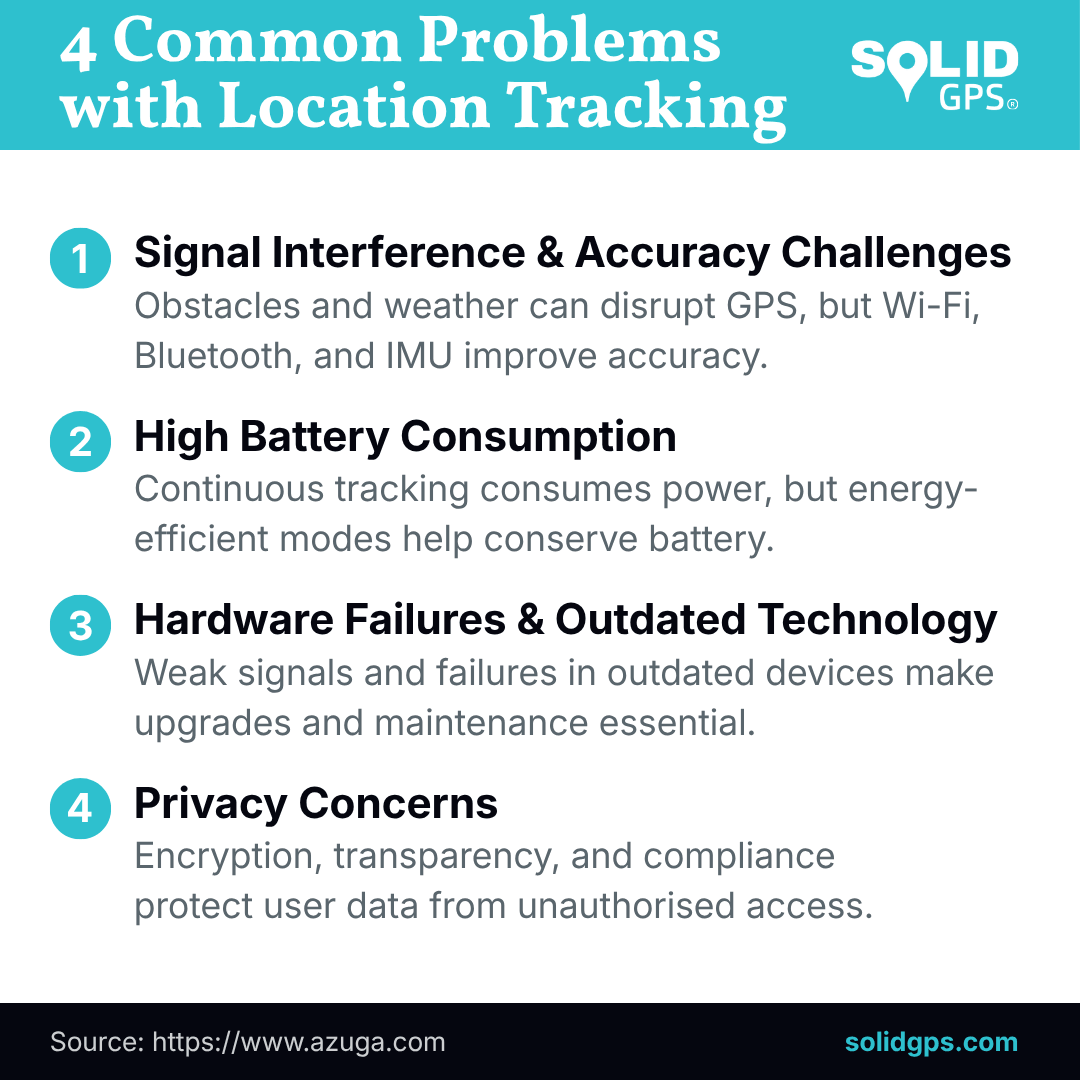
GPS tracking goes wrong for 4 main reasons: weak or blocked signals, battery drain, old or faulty hardware, and privacy risks. Most of these problems have simple fixes. Keep the software up to date, watch battery use, keep the tracker clear of things that block the signal, and choose a reliable tracker that keeps your data safe.
Location tracking tools, such as GPS trackers, are now part of daily life. People use them for navigation, deliveries and personal safety, and they offer many benefits.
Like any technology, GPS tracking has its problems, and some of them matter a lot. Knowing these problems helps you decide when and how to use tracking safely and well. This article covers the most common problems, the limits of the technology, and the steps that fix them.

1. What Blocks a GPS Signal?
Buildings, trees and tunnels can block GPS signals, and heavy rain or thick fog can weaken them. A tracker works out where it is from satellite signals, as our guide to how a GPS tracker works explains. When those signals are weak, the location it reports can be wrong.
These errors cause real problems in navigation, emergency response and managing assets. One example is “GPS drift”, where the location jumps around because signals bounce off nearby surfaces. Our guide to GPS tracker accuracy explains how close a tracker can get.
To fix this, newer GPS technology found in some types of GPS trackers now adds other data, such as Wi-Fi and Bluetooth, to improve accuracy. Modern software kits (SDKs) can also blend in data from an IMU (Inertial Measurement Unit) to predict movement when the GPS signal is weak. That makes them vital for work that needs high precision.
2. Why Do GPS Trackers Drain Their Battery?
GPS trackers use a lot of power because they keep talking to satellites and processing data. This is one of the most common complaints about them, and it can run a battery flat fast. It is a real problem for phone users, who need power left over for other important tasks.
Makers and developers are tackling this with smarter hardware and tracking methods that use less power. For example, Android and iOS now offer tracking modes that let users trade some accuracy for longer battery life.
A tracker with smart power settings or a long battery life means you charge it far less often. Our guide to the best GPS tracker in Australia covers how much battery life to expect.
3. Why Do Old or Cheap GPS Trackers Fail?
Older or cheap trackers often lack the GPS tracker features that reliable tracking needs. They may struggle to hold a strong GPS signal. They can also suffer hardware faults, such as blown fuses, poor power connections, or wrong settings like time zones or COM ports.
Without proper care, even high-end trackers can become unreliable. That is why it pays to move to newer hardware and look after it on a regular basis. Trackers with the latest firmware also work with new maps and system standards, which stops problems like missing roads or wrong directions.
4. Is GPS Tracking a Privacy Risk?
Yes, GPS tracking can put your privacy at risk. As tracking spreads, more people worry about how their location data is collected, stored and used. Privacy is one of the main pros and cons of GPS trackers. If the wrong person gets hold of location data, people can face privacy breaches or even threats to their safety.
Dealing with these concerns takes openness and strong security. Businesses must ask people to opt in and explain why they collect location data. They should also follow privacy laws, such as Australia’s Privacy Act 1988, and encrypt data so no one can get to it without permission.
The ethics matter just as much. Tracking someone without their consent can raise serious legal and moral problems. By putting consent first and keeping data safe, companies can build trust and still offer the benefits of location services.
What Happens When Location Tracking Goes Wrong?
Problems with GPS tracking can cause anything from small hassles to serious harm. Here are the main areas affected:
- Delayed Emergency Response
Wrong location data can slow down emergency crews and put lives at risk. For example, poor tracking during a rescue can waste time and resources.
- Lost Trust and a Poor User Experience
Wrong or unreliable tracking frustrates users and can wear down their trust in location services. When users doubt the technology, they may not want to share their location, which makes the service less useful.
- Wasted Money and Resources
For businesses, GPS errors can lead to costly mistakes, such as deliveries sent to the wrong place or wasteful operations. Finding and fixing these problems uses up even more resources.
- Stress and Legal Problems
On a personal level, people may feel anxious or stressed if they feel watched or unsure how their data is used. In court, wrong location data used as evidence can lead to wrongful convictions or disputes. This shows why accurate tracking matters.

How Do I Fix GPS Tracking Problems?
Most GPS tracking problems are fixed with reliable hardware, regular upkeep and users who know their tracker well. These steps improve accuracy, battery use and overall performance.
- Keep Software and Firmware Up to Date
To keep tracking accurate, keep the software and firmware on each tracker up to date. This prevents problems like old maps or missing roads.
- Choose a Reliable GPS Tracker
A good anti-theft GPS tracker, with tamper alerts and geofence features, can solve many common problems. Reliable trackers with long battery life and modern features are easier to use and need less troubleshooting.
- Use Better Software Tools (SDKs)
Developers can use advanced software development kits (SDKs) to get more from their GPS products. Features like IMU sensor fusion, Wi-Fi triangulation and smart power settings give better accuracy and use less energy.
- Learn How to Use Your Tracker
Teaching users how to get the best from their trackers is vital. Simple steps like checking settings, avoiding places that block the signal and keeping an eye on battery use can make a big difference.

How Does a Solid GPS Tracker Solve These Problems?
A Solid GPS tracker is built to solve these location tracking problems. Its precise, reliable tracking takes away the frustration of wrong or outdated systems. Its long battery life keeps it in use for months at a time, while instant theft alerts and geofences add extra security.
Accurate location data is vital for navigation, logistics and personal safety. The Solid GPS tracker gives you dependable tracking for a wide range of uses.

Can GPS Tracking Problems Be Avoided?
Yes, most GPS tracking problems can be avoided or fixed. Location tracking has changed navigation, logistics and personal safety for the better. Even so, signal interference, geofence errors, privacy concerns and tampering risks can make it work less well.
Deal with these issues early and choose a reliable tracker, such as a car GPS tracker, to get the full benefit of this powerful technology. For help with troubleshooting and keeping your data secure, visit Solid GPS support.
Sources:
Security Journal Americas, car finder GPS cyberattacks
Azuga, common problems with GPS vehicle tracking
Cartrack, 7 most common GPS tracking problems
GPS Technologies, common challenges in GPS tracking for trucking firms

